
COLON AND RECTUM
Colon and Rectum
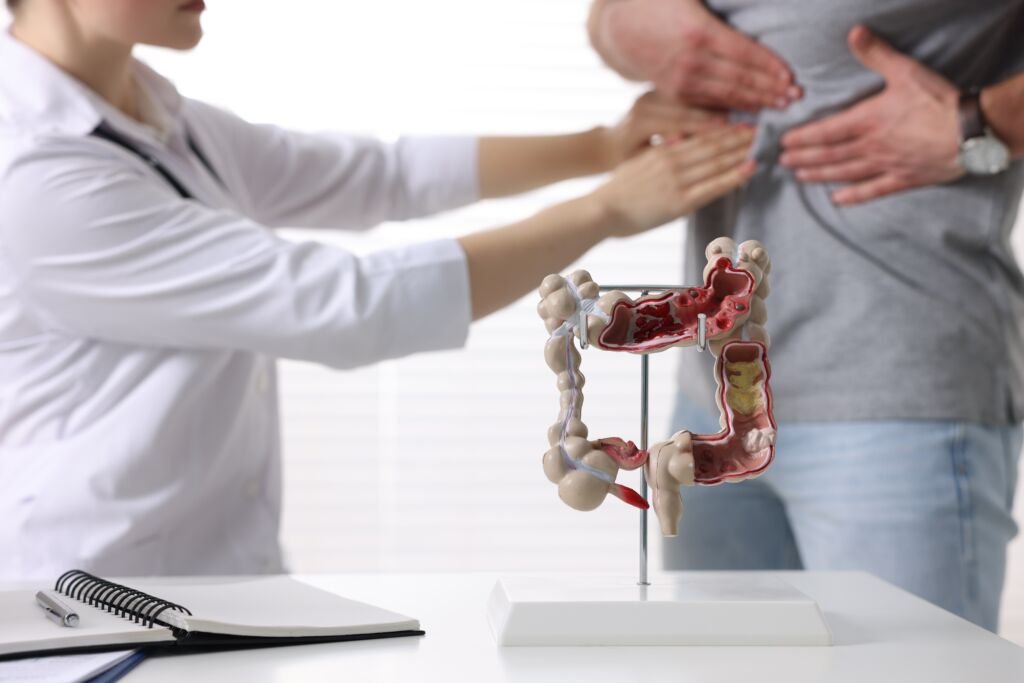
The colon and the rectum are part of the large intestine. It is a long, tube-like organ in your abdomen that starts near the right hip, moves up to the ribs on the right side, goes across to the left side by the ribs, then down to the left hip, from where it makes an S-curve down to the anus. This last part of the colon is called the rectum. The entire colon is about 5 feet (150 cm) long!
In the colon, the inner layer of the mucosa absorbs water and nutrients from the food and drinks we have. After this process, the liquid that remains in the colon forms a semi-solid stool. As this continues to move through the colon, more water is absorbed making it completely solid. From here, the stool leaves the colon and enters into the rectum. The rectum stores the stool until defecation.
Diverticulosis and diverticulitis:
Diverticulosis is a condition in which small pouches called diverticula form in the walls of your digestive tract. This happens when the inner layer of the intestine pushes the weak spots in the outer layer of the intestine. This pressure makes them bulge forming pouches on the wall of the colon. Diverticulosis is often asymptomatic and picked as an incidental finding during CT scan or colonoscopic evaluation for some other ailments. When one or more of these diverticula get inflamed or infected, the condition is called diverticulitis. Fever, abdominal pain or cramping, bloating is some of its symptoms. Eating more fiber-based foods, drinking plenty of fluids and regular exercise may help in preventing diverticulitis.
Colonic Polyps:
Colonic polyps are small clumps of cells that grow on the lining of the colon. Most colonic polyps are harmless but few have the tendency to develop into colon cancer. Obesity, smoking, family history of colonic polyps or cancer and old age (>50 years) are the risk factors. Generally, they do not showcase any symptoms but are usually found during colon cancer screening exams. Patients may have blood in the stool, the passage of excessive mucus in stool or change in bowel habits. Endoscopic removal is the best way to treat them. If the polyps are big then they cannot be removed via a colonoscopy. In such cases, laparoscopic surgery is performed. It is minimally invasive and the recovery time is good. In some patients with hereditary syndromes (like adenomatous polyposis coli), the colon is studded with hundreds of polyps and almost all of the patients end up developing colonic polyps at a later life. In these patients, prophylactic removal of the entire colon and rectum needs to be done. However, the natural passage of stool in ensured by reconstructing the passage using the small intestine.
Colorectal Cancer:
Colon cancer usually starts as polyps (which are small clumps of cells) on the lining of the colon. They do not show any symptoms in the beginning stages and therefore are very difficult to diagnose. Colon cancer usually affects older people and very rarely the young. Therefore, a regular screening test in high-risk individuals is advised to stop the polyps from becoming cancerous by removing them completely. The risk of colorectal cancer can be more if close blood relatives had colorectal cancer at an early age.
Adenocarcinoma
Adeno means glands and carcinoma is a kind of cancer that develops in the epithelial cells. Adenocarcinomas of the colon are the growth and development of the tumors in the lining of the large intestine. They usually start in the inner lining of the large intestine and spread out to other layers from there.
Symptoms:
- Altered bowel habits
- The visible or invisible presence of blood in the stool
- Cramping, bloating and pain in the abdomen
- Unexplainable weight loss
- Fatigue


Treatment:
The ultimate goal after treating the patient is to ensure that cancer has been removed and that its spread has been contained. Treatment for adenocarcinoma depends on the stage of cancer. The three most common options for the treatment of colon cancer are surgery, chemotherapy and radiation therapy.

Surgery:
The surgeon may remove the entire colon or a part of it. This procedure is called a colectomy. The basic aim to remove the tumor with a healthy margin along with adjacent lymph nodes in an adequate number for accurate histological staging. Selected patients may require temporary or permanent stoma (colostomy/ileostomy) at the surgery. These tumors usually have distant spread in the liver and if feasible part of the liver will be resected to achieve cure.

Laparoscopy:
Also known as keyhole surgery or a minimally invasive surgery (MIS), laparoscopy involves the use of a very thin tube called a laparoscope, which has a tiny video camera and a light at the end of it. This is sent into the abdomen through a cannula, enabling the surgeon to view the insides of the abdomen on a monitor outside. With small movements and tiny instruments, surgery is completed and specimen carefully removed through small incisions made in the abdomen. There is minimal blood loss in this surgery and it is very precise. Recovery time is faster when compared to open surgery with also less scarring.

Endoscopy:
A surgeon through endoscopy will remove tumors that are localized and small. It involves the use of a thin, flexible tube with a camera and light at the end of it. A small instrument is also attached to the tube is sent in to remove the cancerous tissue.

Radiation Therapy:
Radiation therapy is often required for rectal cancer and is used along with chemotherapy usually before surgery. Radiation therapy involves the use of high-energy x-rays or other radiations to completely kill the cancer cells or keep them from advancing.

Chemotherapy:
Chemotherapy uses drugs to kill the cancer cells or stop them from dividing. When chemotherapy is ingested through the mouth or the injected into the vein, the medicine directly enters the bloodstream and attacks the cancer cells throughout the body. This is called systemic chemotherapy. Chemotherapy is advised based on the type and stage of cancer.

Inflammatory Bowel Disease
Inflammatory bowel disease (IBD) is a group of intestinal disorders that causes chronic inflammation of the digestive tract. Ulcerative colitis and Crohn’s disease are the two kinds of inflammatory bowel diseases.
Ulcerative colitis:
When the innermost lining of the large intestine and rectum are inflamed for a long period of time and develop sores which are also known as ulcers, the condition is called ulcerative colitis.
Crohn’s disease:
Crohn's disease is different from ulcerative colitis by site and depth of involvement. Crohn's disease can affect any part of the intestinal tract and involves all the layers of the intestine. It has the tendency to form fistula (abnormal passage/communication) and strictures (narrowing of the intestine). Crohn’s disease mimics like tuberculosis of intestine thus posing diagnostic challenges.

Inflammatory bowel disease can predispose to cancers later in the course of the disease.
Symptoms:
- Diarrhea
- Pain and cramping of the abdomen
- Loss of appetite
- Unexplainable weight loss
- Nausea and vomiting
- Fever and fatigue
- Blood or mucus in the stool
Treatment:

Inflammatory bowel disease is usually a chronic disease. A cure is rare but we can keep the disease under control with medications. The treatment path advised by the gastroenterologist can help reduce symptoms, avoid complications and ensure the patient achieves remission.
Surgery is usually required in complicated disease. Ulcerative colitis patients who develop medications related side effects can undergo total removal of colon and rectum. Normal passage of stool in ensured by reconstructing the native passage using the small intestine. This procedure is called total proctocolectomy and ileal pouch-anal anastomosis. The procedure may be done in multiple stages (resection at one sitting and reconstruction at later late after optimization). Patients may require stoma (ileostomy) during treatment. After surgery, medications can be stopped in ulcerative colitis. Unlike ulcerative colitis, Crohn’s disease will have a high recurrence after surgery affecting some other portion of the intestine. Repeated surgery is required in a significant number of patients. Hence the principle of surgery is to preserve as much intestine as possible rather than disease clearance. Medications should be continued for a longer duration, sometimes lifelong in Crohn’s disease
Medication:
Anti-inflammatory drugs: Drugs such as 5-ASA medications are the first medications prescribed to help reduce the inflammation of the digestive tract.
Immune Suppressants:
Also known as immunomodulators, these drugs stop the immune system from attacking the bowel cells thereby reducing the inflammation.
Antibiotics:
The gastroenterologist will prescribe antibiotics to fight off the inflammation caused by bacteria, which prompt and intensify the symptoms for Inflammatory bowel disease.

Constipation:

Treatment:
Consuming food rich in fiber, drinking plenty of water and exercising regularly, can prevent constipation. Constipation normally rectifies itself in a couple of days without any medication and if it doesn’t, a gastroenterologist must be consulted, who will prescribe one of the following medications to help with the condition.
Fiber supplements:
The most recommended and safest options are fiber supplements. Also known as bulk-forming agents, they are to be taken with a lot of water.
Stool Softeners:
When the stool is moist, it’s easier to pass. Stool softeners help with this.
Constipation is a condition wherein a person finds it difficult to empty their bowel or has decreased stool frequency (<3/week). Reduced liquid & fiber intake and/or reduced physical activity are common predisposing factors. Drugs like diuretics, morphine, iron supplements can lead to constipation. Transit of contents in the large intestine is getting affected in some conditions like diabetes. Evacuation is affected in another group of conditions which are clubbed together as ‘Obstructive defecation syndrome’ (ODS). Typically, patients affected by these diseases have incoordination muscles around the anus which leads to excessive straining. Part of the rectum (distal-most part of the large intestine) can come out of the anal canal which is called ‘rectal prolapse’. Rectal prolapse is often neglected as piles and is curable by surgery. Sometimes patients use their fingers to evacuate the stool. Repeated trauma by using finger evacuation can cause ulcers in the rectum, which is called as ‘solitary rectal ulcer syndrome’ (SRUS). The blockage of the intestine due to various diseases like tumors, adhesions, strictures, and volvulus (twist) can also cause constipation.
CT scan and/or colonoscopy are done if there is a clinical suspicion of a structural cause. Some special tests like defecography (visualizing the act of passing stool using image technology like MRI/ x-ray), anorectal manometry and colonic transit study (following the movement of colonic content using x-ray/nuclear scan) may be ordered in some cases.
Lubricants:
Doctors prescribe lubricants to ensure that the stool passes smoothly through the colon.
Stimulants:
Stimulants help the muscles of the intestines to contract rhythmically.
Osmotic agents:
Osmotic agents draw water into the colon to hydrate the stools. Once hydrated, the stool softens, aiding easy movement.
Diarrhea:

Antibiotics:
The gastroenterologist will prescribe antibiotics to fight off the infection caused by bacteria and parasites. Diarrhea caused by viruses cannot be treated with antibiotics.
Electrolytes:
Electrolytes are given to replace the loss of fluids and salts in your body. This is done to help prevent the body from getting severely dehydrated.
When the bowel movements are loose and watery, the condition is called diarrhea. A person suffering from diarrhea will pass stools more than 3 times a day. Diarrhea can be acute (sudden onset and short duration) or chronic (repeated episodes and long duration). Acute diarrhea is usually due to infections. Eating food contaminated with microbes and its toxins leads to diarrhea. The onset of diarrhea can be delayed from 12 hours to 4 days. The cause of acute diarrhea is not usually identified in most patients as it resolves spontaneously after a short duration. Diarrhea can be a side effect of a drug (certain antibiotics) and can be due to food allergy. Chronic diarrhea is due to a wide range of conditions like irritable bowel syndrome, malabsorption syndromes, and inflammatory bowel diseases. Foul-smelling greasy stool (steatorrhea) is due to pancreatic enzyme deficiency.
Treatment:
Correcting and maintaining the water and electrolytes (mainly sodium and potassium) balance is the priority. The patient is asked to drink plenty of fluids like coconut water. Diarrhea rectifies itself but it is advisable to check with the doctor if the symptoms get worse or persist throughout the day.
IV Fluids:
When the body is severely dehydrated and when there is much loss of salts and electrolytes, the gastroenterologist will advise the intake of intravenous (IV) Fluids.